Scan documents
Fast Scanner scans any type of documents, ranging from a receipt to multiple pages book
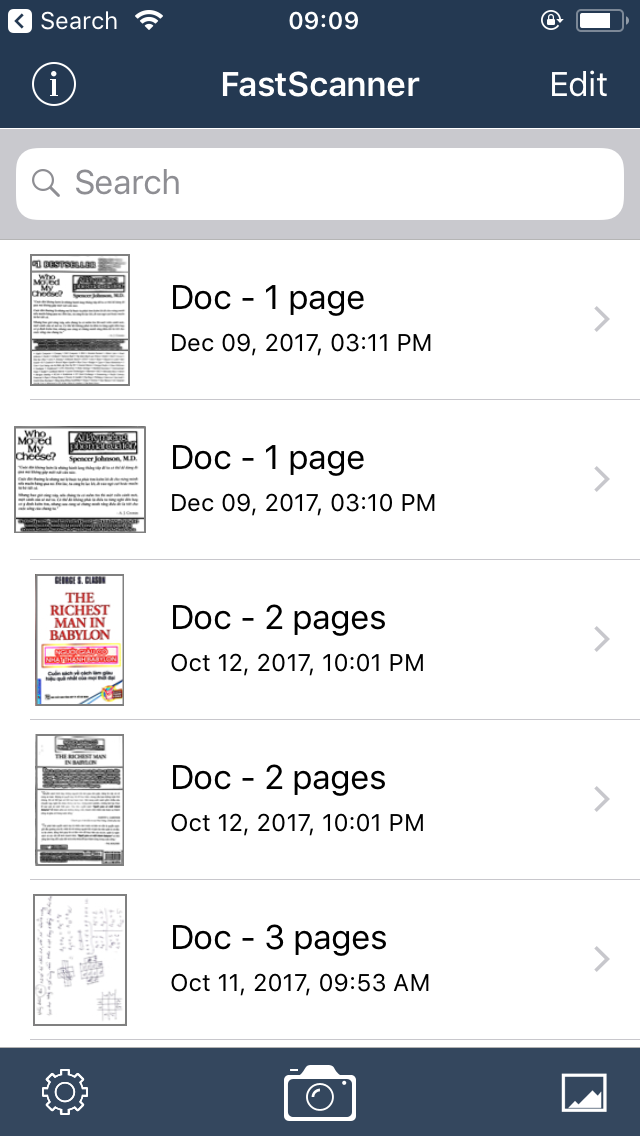
Fast Scanner scans any type of documents, ranging from a receipt to multiple pages book
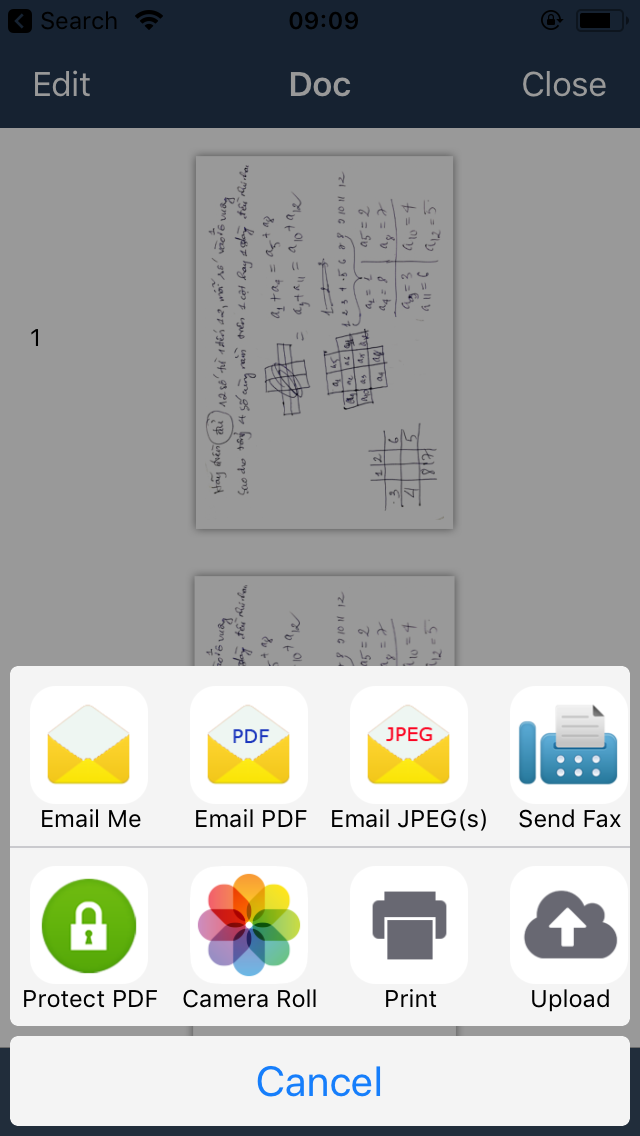
All scanned documents are exported as industry-standard PDF file. You can add new pages or delete existed pages within the PDF file
Just scan any documents and tap "Send" button
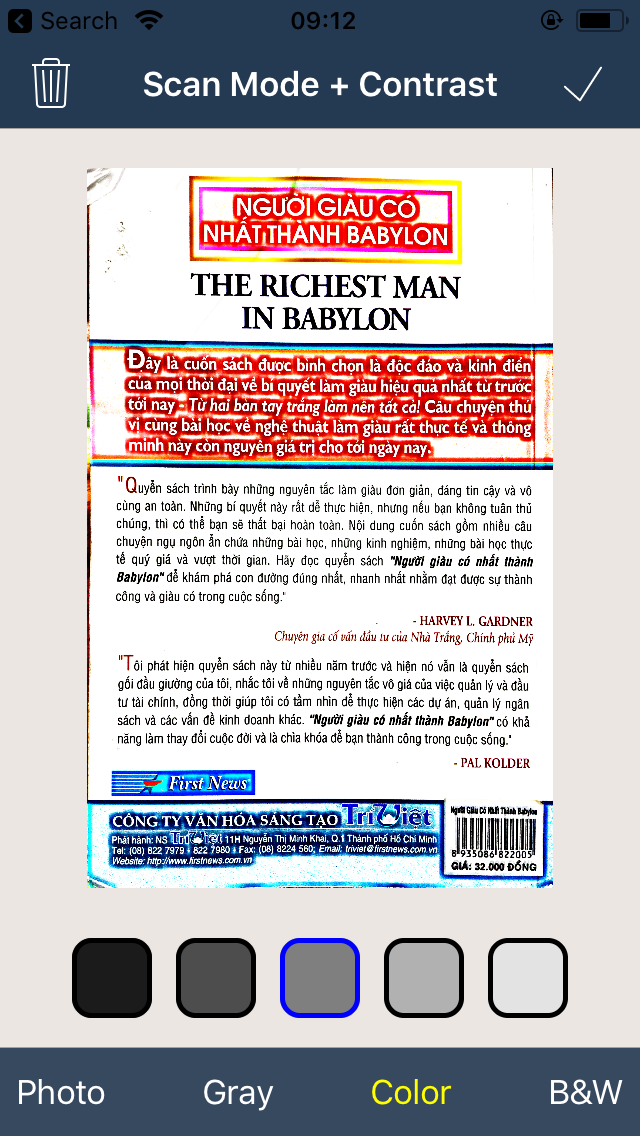
Fast Scanner support a lot of image editing options so you can make the scanned images as easy to read as possible
Extraxt text from your scanned documents
Fax your documents via Easy Fax app (by CoolMobileSolution)
Automatically uploading scanned documents to your own cloud storage (Dropbox, Google Drive or OneDrive)
It is very easy. At main screen, please tap to the Camera icon to start scanning.
Scan the QR codes

Download for iOS

Download for Andriod
Please open app setting, there is an option so that you can use the system camera of your phone.
At camera screen, please switch to batch mode. Using batch scan, you are able to capture multiple pictures and process at a same time.
At adjust contrast screen (after cropping picture), please tap to button at bottom bar to change scan mode (color, photo, grayscale and BW).
No. Please use the same Google Play (or App Store) account to download. In case you bought on Play Store and you want to re-download on App Store. Please contact us, we will give you promo code.
Fast Scanner send your faxes via Easy Fax app (another app of CoolMobileSolution). Please select the document, select action button, select "Send Fax".
For iOS version, please open Setting, backup data to iCloud and restore on your new device. For Android version, please backup data to file and restore backup file on new device.
: Shot on the streets of Paris rather than in a studio, giving it a gritty, realistic feel [11, 14].
It revolutionized global cinema by dismantling traditional Hollywood storytelling structures. It replaced them with raw, deeply personal realism. The film remains a poignant exploration of fractured youth and systemic failure. The Meaning Behind the Title
More than sixty years after its release, The 400 Blows continues to resonate with new generations. Its influence can be traced through countless coming-of-age films, from The 400 Blows to Moonlight , which reimagines the ocean-as-uncertain-future metaphor for a new era.
The film's central character of Antoine Doinel is portrayed by Jean-Pierre Léaud, whom Truffaut discovered after placing an ad in the Paris newspaper Paris-Soir . Of the sixty boys who responded, Truffaut chose the fourteen-year-old Léaud, whom he described as an "antisocial loner ... on the brink of rebellion". Truffaut encouraged Léaud to use his own words rather than stick to the script, resulting in a performance of breathtaking authenticity. In one of the film's most memorable scenes, Antoine is questioned by a psychiatrist in a cold interrogation room; the camera remains fixed on him in a long take, and through a series of fragmenting dissolves, he answers questions about his past as if he were a real boy confessing his life story. the 400 blows
A central theme of The 400 Blows is the systematic failure of adult institutions—specifically the school and the family unit. Truffaut presents these institutions not as sanctuaries, but as prisons. In the classroom, the teacher (Guy Decomble) is portrayed as petty and tyrannical, silencing creativity in favor of rote memorization. The famous scene where Antoine is forced to recite a poem while the class mocks him highlights the isolation of the individual within the collective.
Seeking escape, Antoine slips into truancy, wandering the streets of Paris, watching movies, and committing petty thefts with his loyal best friend, René. The title itself comes from the French idiom "faire les quatre cents coups," which translates to "to raise hell" or "to live a wild life."
The 400 Blows is not a comfortable movie. It bites the hand that feeds it. It bites the parents who neglect, the teachers who humiliate, and the judges who condemn without understanding. : Shot on the streets of Paris rather
Truffaut, a former film critic, used The 400 Blows to break nearly every established rule of filmmaking. The film's revolutionary techniques include:
François Truffaut once wrote that a film should have “the quality of a confession.” No film in his remarkable career embodied that principle more fully than The 400 Blows . It is a work of startling honesty—a director laying bare his own wounds to create art that speaks to universal truths about childhood, loneliness, and the desperate human need for love and recognition.
But what makes this black-and-white portrait of a troubled Parisian schoolboy so enduring? This article explores the film’s profound themes, its deeply autobiographical roots, its revolutionary cinematic techniques, and the legacy of a masterpiece that continues to inspire filmmakers and move audiences today. The film remains a poignant exploration of fractured
Antoine’s teacher is a petty tyrant who humiliates students for minor infractions; at home, his mother (Claire Maurier) is distant and preoccupied, while his stepfather (Albert Rémy) alternates between moments of warmth and sharp impatience. The only solace Antoine finds is in the cinema—a sanctuary he steals money to enter—and in the works of Honoré de Balzac, whose romantic vision of society offers an escape his own life cannot provide.
The 400 Blows offers more than a character study; it is a time capsule of France in the post-war decade. The film depicts Paris at the end of the 1950s, a society still recovering from the Occupation and struggling with austerity, housing shortages, and rigid social hierarchies.