The improvements are not merely cosmetic. They open up new clinical applications.

Visual feedback is a cornerstone of modern speech therapy. Long before advanced software, therapists used mirrors to help patients see their mouth movements. In the digital age, IBM’s Speech Viewer III became a legendary tool in this space. It transformed abstract acoustic signals into clear, engaging animations.

While the software is now a legacy product, its in every modern speech‑therapy app that uses real‑time visual feedback, every clinician who understands the value of bio‑feedback, and every client who discovered that making sounds could be fun. For those who still have access to a licensed copy and the appropriate hardware, the updated Speech Viewer III remains a capable, effective, and even charming addition to the therapeutic toolkit.

The most concrete information about a direct update to Speech Viewer III comes from an official IBM support document, dated February 5, 1997, which states:

Speech Viewer III Updated was built for diverse clinical settings. It targets several specific communication challenges: Hearing Impairments and Deafness

Robust backend features that allow clinicians to track client progress, store audio samples, and maintain detailed clinical records. Core Therapeutic Exercises in SPV III

Spend the first session mapping the client's natural pitch and loudness boundaries. Customize the software's difficulty settings so the target goals are achievable.

The SV3U Updated didn’t just show you what others meant. It showed you what you had stopped allowing yourself to even think . And in the silence of the room, Mira realized the most horrifying truth of all: she had forgotten what her real voice sounded like. The device hadn’t stolen it. She had deleted it herself, one polite lie at a time, until the archive was fuller than the life.

One of the major updates in Speech Viewer III was the refined ability to create and manipulate phoneme models. Clinicians can create, save, and reuse specific acoustic models, allowing for highly individualized training. The software allows users to Fine-tune these models to match the client's progress, creating a personalized learning path. 2. High-Resolution Visual Feedback

Speech Viewer Iii Updated [cracked] Jun 2026

Design and Run Tests Locally or in the Amazon Cloud

  • Create tests using a browser or a mobile application
  • Remote, distributed and cloud-based testing
  • Server and database performance monitoring
  • Flexible error handling and adjustable pass/fail criteria
  • Charts with instant test results available at run time
  • Customizable test report with over 20 tables
  • Support of all major web development frameworks
Get Demo Version
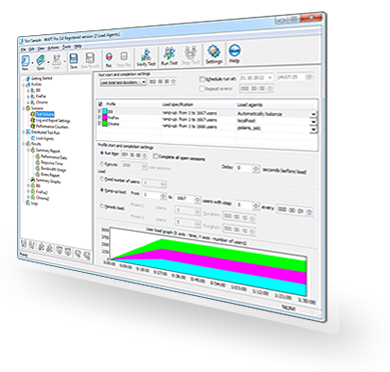
WAPT User Interface

Speech Viewer Iii Updated [cracked] Jun 2026

The improvements are not merely cosmetic. They open up new clinical applications.

Visual feedback is a cornerstone of modern speech therapy. Long before advanced software, therapists used mirrors to help patients see their mouth movements. In the digital age, IBM’s Speech Viewer III became a legendary tool in this space. It transformed abstract acoustic signals into clear, engaging animations.

While the software is now a legacy product, its in every modern speech‑therapy app that uses real‑time visual feedback, every clinician who understands the value of bio‑feedback, and every client who discovered that making sounds could be fun. For those who still have access to a licensed copy and the appropriate hardware, the updated Speech Viewer III remains a capable, effective, and even charming addition to the therapeutic toolkit. speech viewer iii updated

The most concrete information about a direct update to Speech Viewer III comes from an official IBM support document, dated February 5, 1997, which states:

Speech Viewer III Updated was built for diverse clinical settings. It targets several specific communication challenges: Hearing Impairments and Deafness The improvements are not merely cosmetic

Robust backend features that allow clinicians to track client progress, store audio samples, and maintain detailed clinical records. Core Therapeutic Exercises in SPV III

Spend the first session mapping the client's natural pitch and loudness boundaries. Customize the software's difficulty settings so the target goals are achievable. Long before advanced software, therapists used mirrors to

The SV3U Updated didn’t just show you what others meant. It showed you what you had stopped allowing yourself to even think . And in the silence of the room, Mira realized the most horrifying truth of all: she had forgotten what her real voice sounded like. The device hadn’t stolen it. She had deleted it herself, one polite lie at a time, until the archive was fuller than the life.

One of the major updates in Speech Viewer III was the refined ability to create and manipulate phoneme models. Clinicians can create, save, and reuse specific acoustic models, allowing for highly individualized training. The software allows users to Fine-tune these models to match the client's progress, creating a personalized learning path. 2. High-Resolution Visual Feedback

What testing specialists say:

Not your father's testing tool: As a matter of fact, WAPT takes user simulation to a higher level.

- Edmond Woychowsky, CNET Networks

We've been using WAPT and have been quite pleased with the result. Great tool for benchmarking/replay. I have to admit the tool is rock-solid, incredibly performant itself, and delivers dependable, repeatable data.

- John Overbaugh , QA professional

This software has proven invaluable as a means of being able to simulate virtual user load on the new web servers located in our new Data Centre. We are currently in the process of migrating over, and this solution was key for testing how much load our new DC could take in its current setup.

- Aaron Fenwick , Motors.co.uk

Proud to be chosen by
Our Clients