YOLOv8 is a computer vision model architecture developed by Ultralytics, the creators of YOLOv5. You can deploy YOLOv8 models on a wide range of devices, including NVIDIA Jetson, NVIDIA GPUs, and macOS systems with Roboflow Inference, an open source Python package for running vision models.
This is the critical first step in tensile design. ixForten 4000 uses linear and non-linear force density modules to determine the optimal equilibrium shape of a membrane under prestress.
the ship whispered. The walls of the bridge began to contract, the amber veins turning a violent, sickly red. "THE DARK IS TOO LONG."
It performs geometrically non-linear analysis to evaluate how the fabric and its supporting steelwork react to environmental loads like wind and snow.
She approached the monolith. "Ixforten," she whispered. "Wake up."
: Performs Finite Element Analysis (FEA) to calculate stress and displacement under external loads like wind or snow.
Elara looked up through the scratched plexiglass of the cockpit. Drifting against the backdrop of the nebula, silhouetted by the pale light of a dying sun, was the ship. It was massive—a jagged leviathan of gunmetal gray and obsidian glass. It didn't look like a machine; it looked like a fossilized ribcage.
is a specialized modular software system designed for the modeling, non-linear structural analysis, and patterning of tensile membrane structures . Developed by T.S.I. s.r.l. (often associated with developer Gerry D'Anza), it has served as a standard tool for architects and engineers to design lightweight fabric systems, such as stadiums and pavilions, for over two decades. Core Capabilities
The iXForten 4000 is specifically designed to handle a wider range of pharmaceutical compounds than standard bags.
a voice boomed—not from the speakers, but vibrating through the floor and into Elara’s boots. "HEART RATE CRITICAL. FAILURE IMMINENT."
This is the critical first step in tensile design. ixForten 4000 uses linear and non-linear force density modules to determine the optimal equilibrium shape of a membrane under prestress.
the ship whispered. The walls of the bridge began to contract, the amber veins turning a violent, sickly red. "THE DARK IS TOO LONG."
It performs geometrically non-linear analysis to evaluate how the fabric and its supporting steelwork react to environmental loads like wind and snow.
She approached the monolith. "Ixforten," she whispered. "Wake up."
: Performs Finite Element Analysis (FEA) to calculate stress and displacement under external loads like wind or snow.
Elara looked up through the scratched plexiglass of the cockpit. Drifting against the backdrop of the nebula, silhouetted by the pale light of a dying sun, was the ship. It was massive—a jagged leviathan of gunmetal gray and obsidian glass. It didn't look like a machine; it looked like a fossilized ribcage.
is a specialized modular software system designed for the modeling, non-linear structural analysis, and patterning of tensile membrane structures . Developed by T.S.I. s.r.l. (often associated with developer Gerry D'Anza), it has served as a standard tool for architects and engineers to design lightweight fabric systems, such as stadiums and pavilions, for over two decades. Core Capabilities
The iXForten 4000 is specifically designed to handle a wider range of pharmaceutical compounds than standard bags.
a voice boomed—not from the speakers, but vibrating through the floor and into Elara’s boots. "HEART RATE CRITICAL. FAILURE IMMINENT."
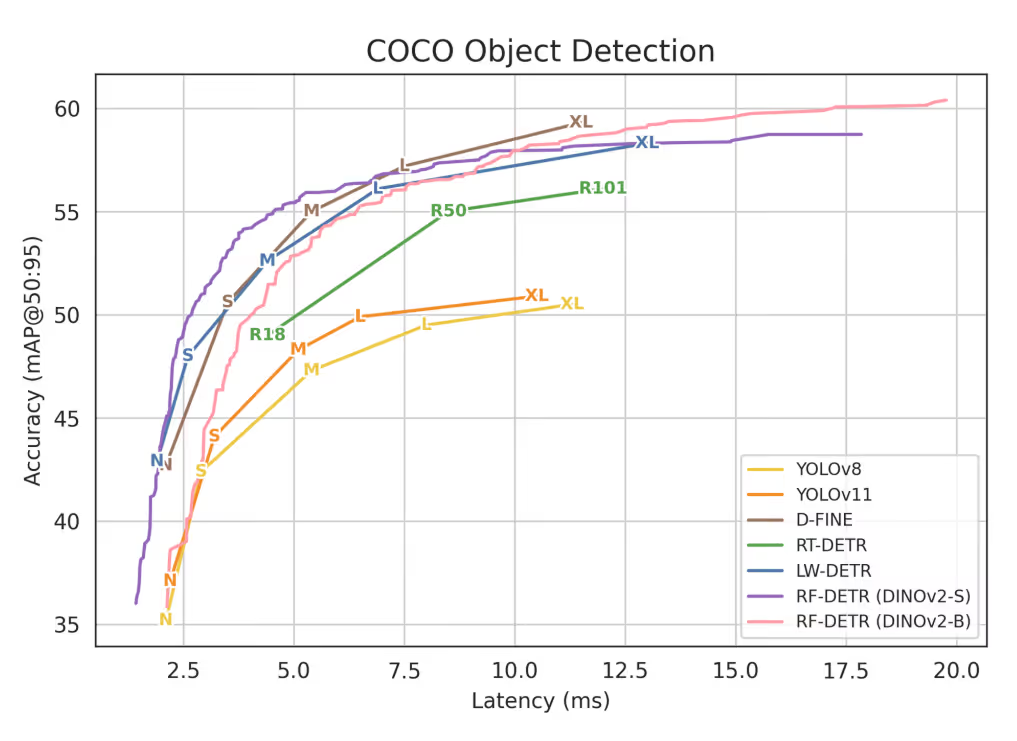
You can train a YOLOv8 model using the Ultralytics command line interface.
To train a model, install Ultralytics:
Then, use the following command to train your model:
Replace data with the name of your YOLOv8-formatted dataset. Learn more about the YOLOv8 format.
You can then test your model on images in your test dataset with the following command:
Once you have a model, you can deploy it with Roboflow.
YOLOv8 comes with both architectural and developer experience improvements.
Compared to YOLOv8's predecessor, YOLOv5, YOLOv8 comes with: ixforten 4000
Furthermore, YOLOv8 comes with changes to improve developer experience with the model. This is the critical first step in tensile design